
Last updated: 15 October 2026
A musty smell in a crawl space usually means damp materials, and sometimes mold growth, somewhere under the house. The smell alone does not say which, so the useful step is to find and fix the moisture. Upbeat Restoration serves homes in Sandy Springs, Georgia, and also in Roswell, Atlanta and Brookhaven. This guide covers what the odor points to and what is safe to check yourself.
Why does a crawl space smell musty?
Mold needs moisture to grow, and a musty odor often comes from damp wood, soil, insulation or stored items that stay wet for long stretches. Bare soil gives off water vapor all year. Warm, humid outside air drifting through foundation vents meets cooler surfaces and leaves moisture behind. Plumbing leaks, poor drainage and gutters that dump water beside the foundation add more.
Sandy Springs gets about 51.82 inches of rain a year in a humid subtropical climate, and many houses here went up during the housing boom after GA 400 and I-285 opened in the early 1960s, so older vented crawl spaces are common. In September 2009, nearly 100 people were evacuated when heavy rain flooded parts of Sandy Springs.
Still weighing your options? Call (404) 495-3899 for a straight answer.
Does the smell mean there is mold?
Not always. A musty odor can point to damp materials or to growth, but a smell cannot tell the two apart or name the cause. The CDC does not recommend routine mold testing, and the EPA guide to mold, moisture and your home puts the focus on controlling moisture. If the area stays damp, treat it as a problem whether or not growth is visible.
Smell coming up from below the floor? Call (404) 495-3899, open 24 hours a day, and describe what you notice.
What can a homeowner safely check?
Stay on the outside and at the access point, and keep it simple.
- Look at the ground around the foundation for pooled water, and check that downspouts carry water away from the house.
- Open the access door briefly and look in with a flashlight without crawling through the space.
- Note standing water, dripping pipes, stained wood, fuzzy or dark patches, or torn plastic on the ground.
- Notice whether the floors above feel soft or the smell gets stronger indoors on humid days.
- Take photos for later, and write down when the smell is strongest.
What should be left alone?
Do not scrub, scrape, spray or brush anything that looks like mold. Disturbing it can spread spores and dust through the space and up into the living area. Do not run fans that blow crawl space air into the house, and do not seal the odor in with paint or air fresheners. Wet insulation and damp wood are best handled by a crew with protective gear. The EPA mold cleanup page explains why larger areas need more than a household cleaning.
Ready for a practical answer? Call (404) 495-3899 to discuss your project.
How does the moisture get in?
The common routes are listed below, and more than one can be at work at once.
- Groundwater and surface runoff after heavy rain, especially on sloped or creek-side lots
- Humid air entering through open foundation vents in summer
- Bare soil that releases vapor into the space
- Leaking supply lines, drain lines or an air conditioning drain
- Gaps in the foundation walls or around pipe openings
What fixes the smell for good?
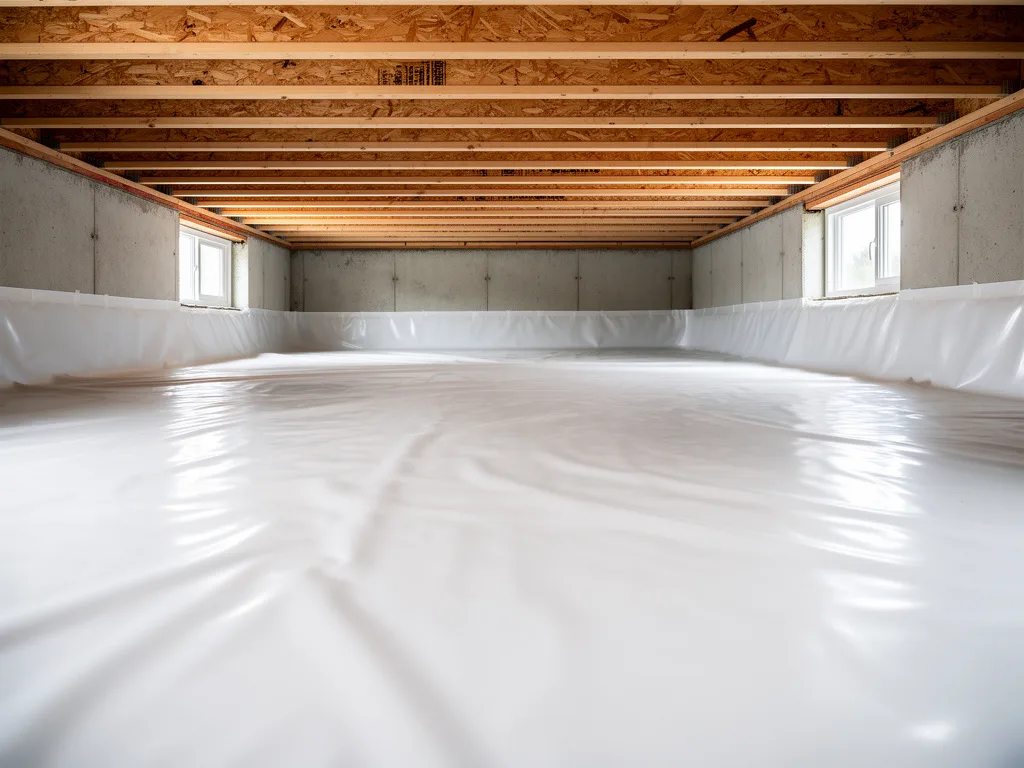
Deodorizing does not last if the space stays damp. The lasting fix is to stop the water, dry the materials, clean or replace what is affected, and then control humidity going forward. Many homes do this with crawlspace encapsulation, which covers the ground and walls with a sealed liner so soil moisture stays out of the air. Where growth is present, mold remediation comes first so the area is cleaned before it is sealed. Local homeowners can read about the work at crawlspace encapsulation in Sandy Springs.
Questions about your specific surface or budget? Call (404) 495-3899 — no obligation.
When is it time to call?
Call when any of these show up.
- The odor returns after the area dries out
- You see standing water, sagging insulation or dark patches
- Floors above feel spongy or look warped
- A pipe has leaked under the house
- Someone in the home has trouble with the indoor air and the smell is strong
A crew can look at the soil, wood and walls, point out where the water comes from and explain the options. You can also use the contact page, or call (404) 495-3899 at any hour.
Questions about a musty crawl space
Is a musty smell in my crawl space dangerous?
It is a sign of moisture that should be dealt with. The smell does not show what is causing it or how much is present, so the safe move is to avoid disturbing the area and have it looked at. For health concerns, talk with a doctor.
Can I just use a dehumidifier or air freshener?
A dehumidifier may help once the water source is fixed, but covering the smell without stopping the moisture lets damp materials keep deteriorating. Find the source first.
Should I test the crawl space for mold?
The CDC does not recommend routine mold testing. Finding and fixing the moisture matters more than naming the type of mold.
Will crawlspace encapsulation get rid of the smell?
It reduces soil moisture and humid air in the space, which is a common cause of the odor. Any wet or affected materials may need cleaning or replacement first, and an on-site visit shows what applies to your house.