
Last updated: 15 October 2026
Upbeat Restoration handles fire damage restoration for Sandy Springs homeowners, from the first emergency call through soot cleanup, smoke odor treatment and drying. Call (404) 495-3899 at any hour; the line is answered 24 hours a day, 7 days a week. The full list of steps is on the fire damage restoration service page. This page covers what a fire loss looks like in Sandy Springs specifically. Background on the city is on Sandy Springs on Wikipedia.
How the local climate changes a fire cleanup
Sandy Springs has a humid subtropical climate, with average annual precipitation of 51.82 inches and March as the wettest month at 5.52 inches. That matters after a fire. Soot and smoke particles are slightly acidic, and damp air keeps them active on metal, tile grout and painted surfaces. A house that sits through a wet week with soot on the walls can end up with stains and corrosion that a prompt cleanup would have avoided.
Humidity also keeps smoke odor alive. Particles trapped in carpet, ceiling insulation and the hollow spaces inside walls release their smell again whenever the air turns muggy, which is why a house can seem fine in a dry spell and smell of smoke again after a storm. Dehumidifiers and air scrubbers are part of the job for that reason, and not only for the water the fire department used.
Questions about your specific surface or budget? Call (404) 495-3899 — no obligation.
Older Sandy Springs houses and what burns in them
Georgia 400 and Interstate 285, built in the early 1960s, were followed by a housing boom in Sandy Springs. Many homes here come from that era or the decades after it, and they often carry features that shape a fire loss:
- Attics with older blown-in or batt insulation that soaks up smoke and water.
- Textured ceilings and several layers of paint that hold soot in the surface.
- Original wiring or panels that must be checked by a qualified electrician before power returns.
- Hardwood floors under carpet that may be worth saving if water did not sit on them.
- Crawlspaces and basements where firefighting water drains and lingers.
Each of these changes the plan. Insulation that is both smoky and wet is usually cut out. Hardwood can often be dried and cleaned if the crew gets to it soon enough. A short walk-through at the start sorts out which is which.
Not sure which option fits your situation? Call (404) 495-3899 and talk it through with a contractor.
Creek-side lots and water that has nowhere to go
Sandy Springs has plenty of low ground. Marsh Creek and Nancy Creek run through the city, and the Chattahoochee River forms its western boundary and northern boundary. In September 2009 heavy rain flooded parts of the city, and bridges over both creeks were closed. Homes near that kind of low ground can have saturated soil, so water used to fight a fire may drain slowly from a crawlspace or lower level instead of soaking away.
If a fire has left water standing below the main floor, the drying work comes first, since wet framing can start to grow mold within a couple of days. Where that has already happened, the team handles mold cleanup along with the fire work. The same crew can also look at the crawlspace encapsulation service once the structure is dry, to help keep ground moisture from coming back up under the house.
Smoke in the house right now? Call (404) 495-3899 and describe what is burned, wet or sooty.
A sensible order of work after a Sandy Springs house fire
First hours
Follow the fire department’s instructions about re-entry. After that, call the insurance company and then call for restoration help. If doors will not lock or windows are broken, ask about boarding up. Photograph each room before anything is moved.
First days
Standing water and wet debris go out first. Ductwork and HVAC returns deserve attention too, because the system can carry smoke to rooms the fire never touched. Air scrubbing starts early, while soot is still loose in the air.
Cleaning and deodorizing
Surfaces are cleaned from the ceiling down, so soot is not dragged across a floor that has already been done. Odor treatment follows once the source material is gone or sealed.
Handing the rooms back
Moisture readings and a smell check come before the rooms are released for rebuilding. Repairs such as new drywall, paint and flooring are separate trades, and the crew can describe what needs replacing so the next contractor starts with a clear list.
Kitchen fires, electrical fires and small ones
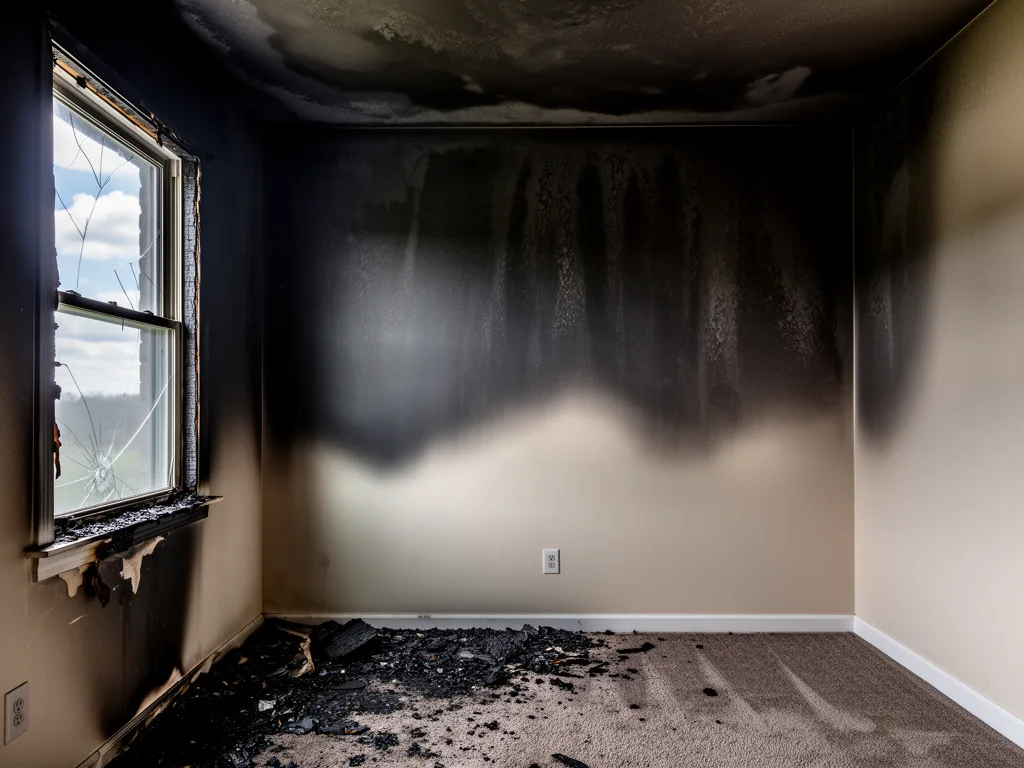
Many fires in houses start in the kitchen or from electrical equipment, and a fire that never spread beyond one room can still send smoke through the whole house. A stovetop grease fire may char a hood and cabinet but leave a sticky film on every surface within reach. An electrical fire inside a wall may be out in minutes and still leave soot in the cavity and smoke odor in the rooms on both sides.
Small does not mean harmless. A homeowner who is unsure whether a minor fire needs professional cleaning can call for a free on-site estimate and a plain explanation of the scope, with no obligation to go further.
Still weighing your options? Call (404) 495-3899 for a straight answer.
Credentials and where to check them
Upbeat Restoration is locally owned, licensed, insured and IICRC-certified, and the office is at 6851 Roswell Rd, GA 30328. The team also works in Roswell, Atlanta and Brookhaven. Licensing can be checked on the Georgia Secretary of State licensee search. The team helps homeowners record damage with photos and written notes for an insurer, though it cannot promise what a claim will pay.
Ready for a practical answer? Call (404) 495-3899 to discuss your project.
Fire Damage Restoration Sandy Springs: your questions answered
How soon after a fire should cleanup start in Sandy Springs?
As soon as the fire department releases the house. Humid weather lets soot stain surfaces and lets smoke odor settle deeper, and wet materials can grow mold within a couple of days, so waiting makes the job larger.
Can smoke from a small kitchen fire spread through the whole house?
Yes. Smoke and fine soot travel through open doors, ceiling gaps and the HVAC system, so rooms far from the stove can still hold odor and a thin film on walls and cabinets.
Does the HVAC system need cleaning after a fire?
Often, yes. Returns and ducts can carry smoke and soot through the house. The crew checks the system during the walk-through and advises whether cleaning or filter changes are needed before it is turned back on.
Who does the rebuilding after the cleanup is finished?
Rebuilding such as drywall, paint and flooring is a separate trade. The restoration crew finishes cleaning, drying and odor control, then gives a clear list of what needs replacing.
Is the estimate for fire damage free?
Yes, the on-site estimate is free and comes with a plain explanation of what the work involves. Call (404) 495-3899 to arrange a visit.
Related work for the same property
A fire often brings a second problem. For hoses, sprinklers or a broken pipe, the water damage restoration service in Sandy Springs covers the drying side. For the general overview of fire work, see the main fire damage restoration page. Questions about whether a street or address is covered can go to the contact page or to (404) 495-3899.
The same team also handles mold remediation in Sandy Springs and crawlspace encapsulation in Sandy Springs.