
Last updated: 15 October 2026
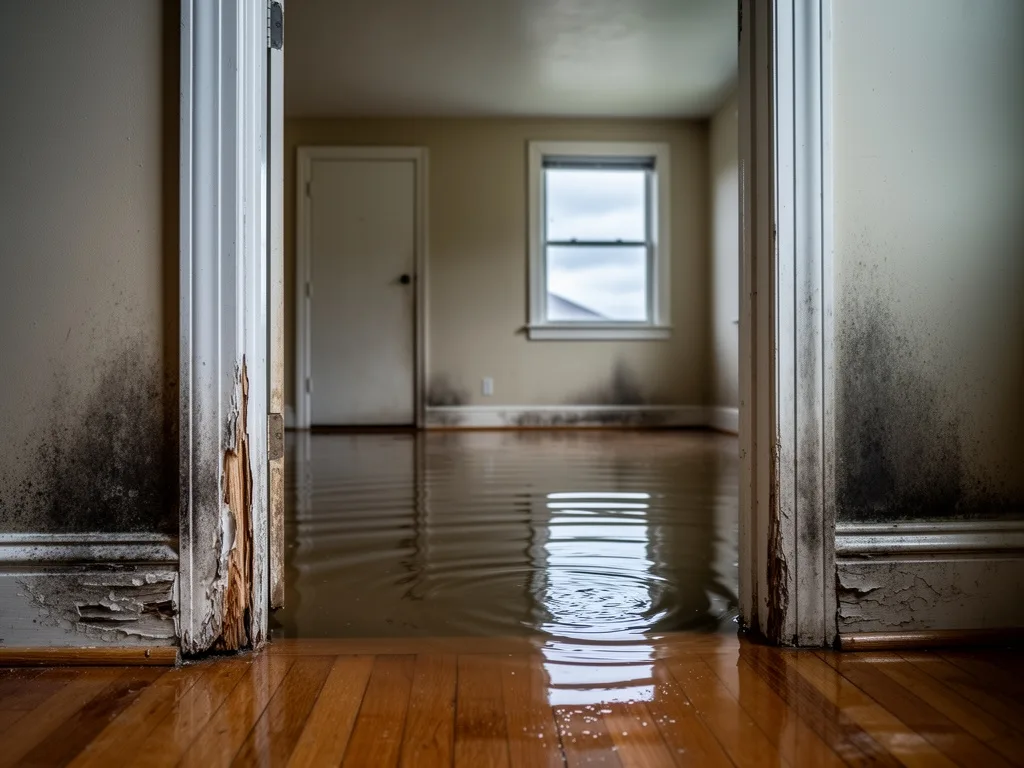
Upbeat Restoration provides water damage restoration in Sandy Springs, Georgia, with a crew that answers at any hour. A burst pipe, a failed water heater or a wet basement after a heavy storm needs a crew that can start drying the same day. Call (404) 495-3899 and a person picks up, day or night, every day of the week. Background on the city is on Sandy Springs on Wikipedia. For background, read the stages and timing of a drying job.
Why water gets into Sandy Springs houses
Sandy Springs has a humid subtropical climate. The yearly average is 51.82 inches of rain, and March is the wettest month at 5.52 inches. That much rain keeps soil saturated for long stretches, and saturated soil pushes water toward foundation walls, window wells and basement doors. Gutters that overflow, downspouts that dump beside the house and grading that slopes toward a wall all send water where it does not belong.
Humidity adds a second problem. Even after the liquid water is gone, damp air lingers in closed rooms, wall cavities and crawlspaces. In a warm, wet region, materials that stay damp can begin growing mold within about 24 to 48 hours. That is the reason a wet house is dried on a schedule and not left to dry by itself.
Still weighing your options? Call (404) 495-3899 for a straight answer.
Creeks, the river and past flooding
The Chattahoochee River forms the western edge of the city, and Nancy Creek and Marsh Creek run through neighborhoods on the way to it. In late September 2009, heavy rain flooded parts of Sandy Springs. Emergency dispatchers took 614 calls in three hours, bridges over Nancy Creek and Marsh Creek were closed, and nearly 100 people were evacuated. Homes near any creek bank or low spot know that rain upstream can become water indoors quickly.
The city has since added stormwater features, including the Marsh Creek Rain Garden, which filters runoff through plants. Those projects help the neighborhood, but they do not protect a single basement from a heavy downpour. Water that comes in from a creek, a storm drain or the ground is treated as contaminated. Porous items it touched, such as carpet, padding and drywall, are usually removed and not dried in place.
Houses from the housing boom and their weak points
Georgia 400 and Interstate 285 were built in the early 1960s, and a housing boom followed in Sandy Springs. Many homes in the city date from that period or after it, so plumbing, roofs, water heaters and appliance hookups have had decades of wear. Common trouble spots in houses of that age include:
- Supply lines on washers and dishwashers that crack or loosen.
- Older water heaters that rust through at the base.
- Pipes inside walls that develop pinhole leaks.
- Roof flashing and valleys that let rain in around chimneys and vents.
- Finished basements built below grade with no easy path for water to leave.
A leak in any of these places can run unseen inside a wall for a long time. A soft baseboard, a ceiling stain or a musty smell in a closet is often the first sign.
Water in the house right now? Call (404) 495-3899 and ask for a crew to be sent.
The first hour in a wet Sandy Springs home
What happens before the crew arrives matters. Stop the water if it is coming from a pipe or appliance by closing the shutoff valve. If the water came in from outside, do not wade through it where outlets, cords or a sagging ceiling are nearby. Turn off power to the wet area at the breaker only if that can be done from a dry spot.
Photograph the damage before anything is moved. Lift small furniture and electronics onto dry surfaces, and open interior doors so air can move. Keep a list of damaged belongings. These records also help when an insurance claim is filed.
Ready for a practical answer? Call (404) 495-3899 to discuss your project.
How the drying works on site
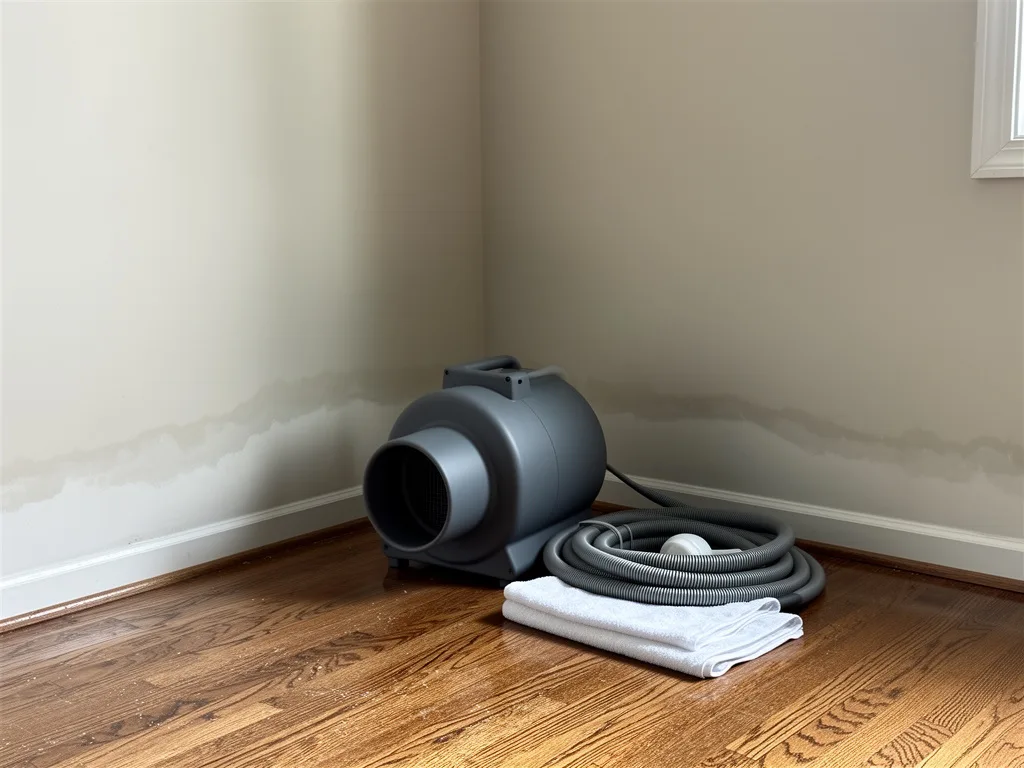
The crew arrives with moisture meters and starts by finding every wet surface, including the ones that look dry. Standing water is extracted. Materials that cannot be saved are cut out and bagged, which often includes soaked padding, insulation and the lower section of wet drywall. Air movers and dehumidifiers then run in the affected rooms, and the crew returns to read the meters until framing and subfloor match a dry reference.
In a humid climate the dehumidifiers matter as much as the fans. Moving wet air around a closed house only spreads the moisture, so the equipment is placed to pull it out of the structure and not just stir it.
Questions about your specific surface or budget? Call (404) 495-3899 — no obligation.
When water leads to mold or a crawlspace problem
If a leak went unnoticed for days, mold may already be growing in the wall or under the floor. In that case the job includes the mold remediation service, which has its own containment and cleaning steps. Homes with a damp crawlspace can also be checked for the conditions that keep letting moisture back in.
Insurance records and rebuilding
Upbeat Restoration helps homeowners document a loss with dated photos, notes on what was wet and what was removed, and the drying readings. The business does not decide a claim and cannot promise what an insurer will pay. After the structure is dry, the rooms that were opened are rebuilt with new drywall, flooring, trim and paint.
Not sure which option fits your situation? Call (404) 495-3899 and talk it through with a contractor.
What Sandy Springs homeowners ask about water damage
Can a basement in Sandy Springs be dried after a creek or storm flood?
Often yes. Standing water is pumped out, wet carpet, padding and drywall are removed, and dehumidifiers run until readings are dry. Flood water is treated as contaminated, so porous materials that touched it are usually replaced.
How do I know if water is hiding inside a wall?
Signs include bubbling paint, a soft or stained baseboard, a musty smell and a ceiling stain. A moisture meter can confirm what the eye cannot see, and the crew uses one on every job.
What should I do first when a pipe bursts?
Close the main water valve or the valve at the fixture, move small items and electronics out of the wet area, and photograph the damage. Then call (404) 495-3899 so drying can start quickly.
Why does wet drywall have to be removed?
Drywall that stays soaked loses strength and can hold moisture against the framing. Mold can start on damp material within roughly 24 to 48 hours, so wet sections are often cut out and replaced.
Is the crew available at night and on weekends?
Yes. Emergency calls are answered 24 hours a day, 7 days a week, and the on-site estimate is free.
Who does the work
Upbeat Restoration is locally owned and operated, licensed and insured, and the crew is IICRC-certified. The full list of what a water job includes is on the water damage restoration service page. To describe a problem or ask whether an address is covered, call (404) 495-3899 or send a message through the contact page.
The same team also handles fire damage restoration in Sandy Springs and crawlspace encapsulation in Sandy Springs. The crew also takes calls in Roswell, Atlanta and Brookhaven.